

Longer-term subscribers will know that I also write a regular column for DutchNews called Wine Watch. As the festive season is upon us, and Amsterdam’s 750th anniversary year draws to a close, I decided to celebrate December Dutch-style: with wines selected from all over the Netherlands. That DutchNews piece covered a lot of wines, but what I didn’t include was the Dutch wine & cheese tasting I’ve started offering here in my home city of Amsterdam. So this week’s Substack gives you a flavour of that tasting: the wines, the cheeses, the details – and why the Netherlands is basically the new Champagne region!
A short history of Dutch wine
“Dutch wine?” I hear you ask incredulously. Yes, it’s a thing! In fact, Limburg’s relationship with viticulture goes all the way back to Roman times. Wine was made there throughout the Middle Ages, but popularity waned after the Little Ice Age brought colder winters, while foreign wine imports grew and beer and jenever took over as the national booze of choice.
By the 19th century, Dutch wine had almost disappeared. But the 1970s saw a quiet rebirth, led by pioneers like Apostelhoeve near Maastricht. Since then, things have snowballed: the country has expanded from just seven wineries in 1997 to over 180 today, with vineyards in all 12 provinces – from Zeeland’s windswept coastline in the south to the flat pastures of Friesland in the north.
So how is this even possible in the rainiest country on earth?
Yes, the Netherlands is wet. Summers are over before you know it, the growing season is short, and anyone who’s spent more than five minutes here knows that it rains all year round. But the combination of climate change, smart viticulture and new grape varieties has genuinely shifted what’s possible.
Hybrid grapes like Johanniter, Solaris, Souvignier Gris and Cabernet Cortis are more resistant to the fungal diseases that thrive in humid climates, making organic practices easier and reducing the need for pesticides. Meanwhile, classic grapes like Pinot Noir, Riesling, Pinot Blanc and Chardonnay are starting to flourish in the limestone-rich hills of Limburg.
The Netherlands’ own appellation system
You’ve probably heard of the French AOC (Appellation d’Origine Controllée) or the Italian DOC (Denominazione di Origine Controllata) systems. Well, like many other countries, the Netherlands has come up with its own version. In case you spot these acronyms on bottles, now you know what they mean:
BOB – Beschermde Oorsprongsbenaming: the Dutch equivalent of a protected designation of origin, guaranteeing that the wine comes from a specific region with defined styles and rules.
BGA – Beschermde Geografische Aanduiding: the Dutch equivalent of a protected geographical indication – broader in scope, but still tied to place.
The first Dutch BOB only appeared in 2017 (Maasvallei Limburg, the region running along the River Maas between Dutch and Belgian Limburg), and more have followed in quick succession. It’s a sign of a wine country finding its identity and taking itself seriously.
A preview of my Dutch wine & cheese tasting
Alongside my wine writing, I now host Dutch wine & cheese tastings in Amsterdam: informal, accessible events where we explore the country’s most important grapes and wine regions alongside carefully chosen Dutch cheeses. The tasting lasts around two to three hours, includes six wines from across the Netherlands, and is designed for small private groups – from birthday gatherings and team-building events to visitors and locals looking for a cultural and culinary experience that goes beyond rubbery Gouda and basic beer.
You can see me getting enthusiastic about it on Instagram:
As promised, here’s a preview of the tasting line-up… Bear in mind that these wine pairings are only designed to give you an impression – the exact wines and cheeses included depend on availability at the time!
Aperitifs, sparkling and still
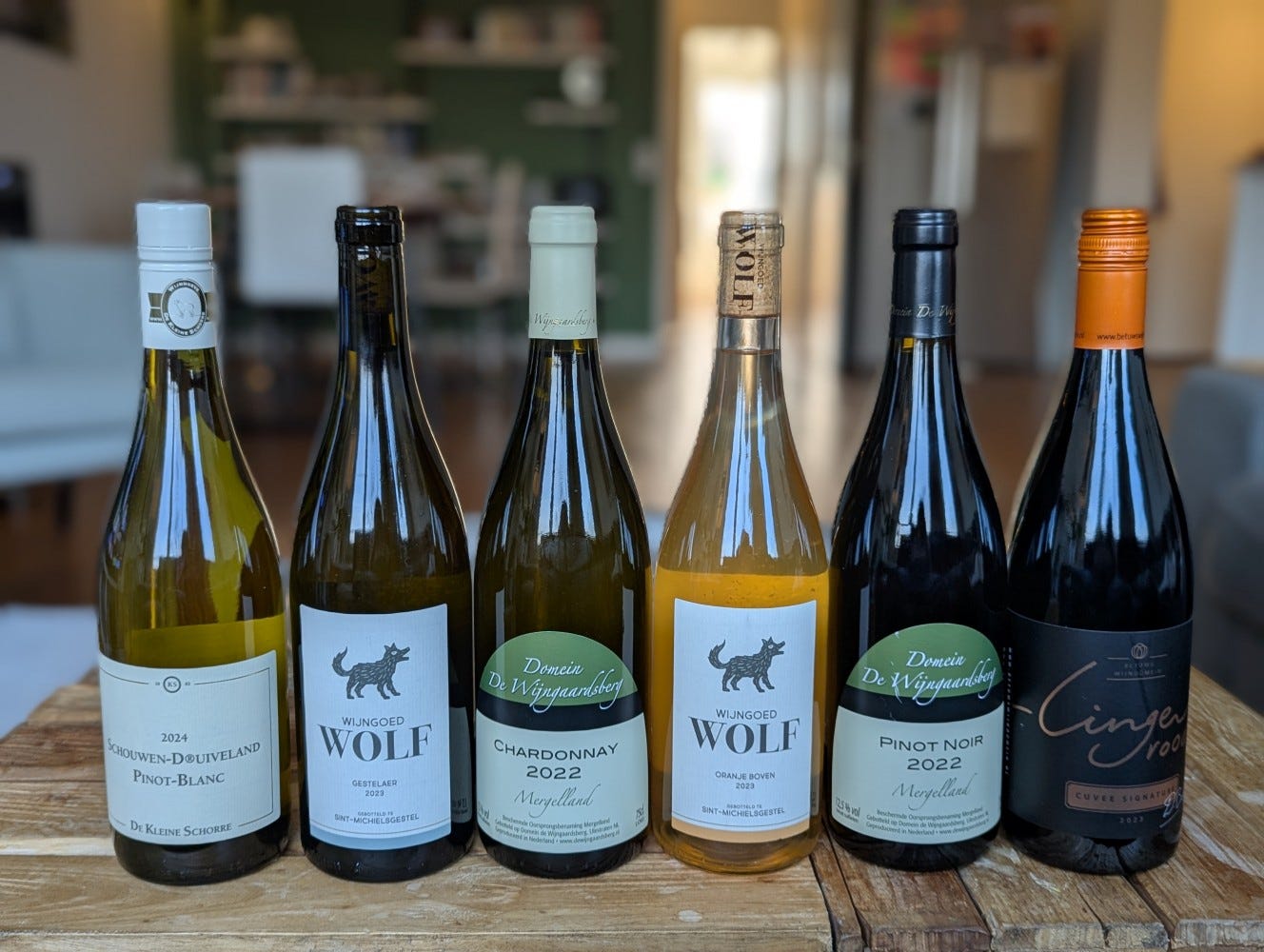
We start the tasting with a welcome drink – either a sparkling wine (for which the Dutch climate is particularly suitable) or a refreshing white. Frysling’s Brûswyn Johanniter is a traditional method sparkler from Friesland that combines crisp apples and pears with soft brioche and a creamy mousse. Wijngoed Wolf’s Gestelaer, meanwhile, is a still white blend from Brabant that’s citrusy, aromatic and approachable.
“Ziltig” whites from Zeeland
From the flat pastures of Friesland, we head south-west to Zeeland – a province shaped by the sea. Wijnhoeve De Kleine Schorre sits on what was once the seabed, its vineyards rooted in shell-rich soils that lend a subtle saline edge to the wines. It’s why Zeeland whites are often described as ziltig – literally “salty”, though in practice more mineral than briny.
De Kleine Schorre’s Pinot Blanc is a perfect example: stainless-steel clean and precise, high in acidity, with gooseberry, blossom and a distinct mineral lift. (Fun fact: KLM serves De Kleine Schorre’s white wines on some of their international business class flights!)
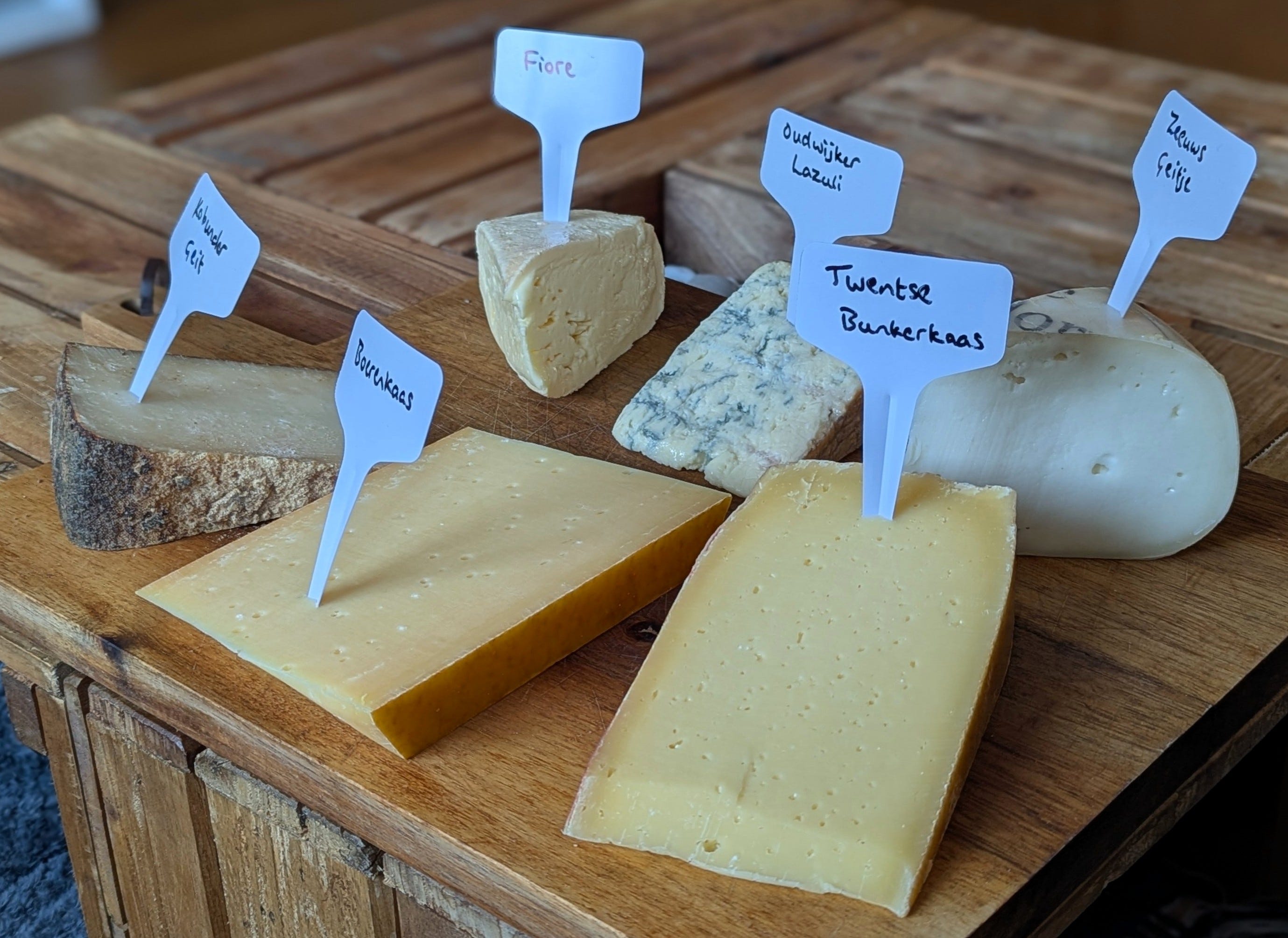
Cheese pairing: Zeeuws Geitje, a young goat’s cheese from the southwest tip of Zuid-Holland (right next to Zeeland). The creamy texture and gentle tang of the cheese round out the wine’s acidity beautifully.
Limburg’s full-bodied Chardonnay
From the windswept coast we travel inland to Zuid-Limburg, where the Dutch landscape becomes un-Dutchly hilly. Domein De Wijngaardsberg sits on south-facing slopes above Ulestraten, planted on loess and marl soils that resemble parts of Champagne and the Mosel. If there’s anywhere in the Netherlands where classic grape varieties thrive, it’s here.
Their Chardonnay is standout: half aged in French barriques, half in stainless steel, with full malolactic conversion for extra body. The result is a wine that balances richness with freshness: honeysuckle and stone fruit on the nose, vanilla sponge and a touch of caramel on the palate, all lifted by bright acidity. It’s unmistakably cool-climate, but with real depth and complexity.
Cheese pairing: Kobunder Geit, an aged goat’s cheese from Friesland. Its firm texture and nutty flavour bring out the wine’s creaminess without overpowering its elegance.
Brabant’s biodynamic orange wines
Next we make our way up to Brabant, where Wijngoed Wolf is quietly redefining what Dutch wine can be. The estate is biodynamic, focused on organic viticulture and unafraid to experiment – which brings us to Oranje Boven, their skin-contact Souvignier Gris.
Fermented on the grape skins for around five weeks, it pours a peachy shade and has that unmistakable combination of fruit, texture and gentle tannin. Expect aromas of orange peel, quince and dried apricot, followed by a savoury, slightly herbal edge that makes the wine feel both rustic and refined.

Cheese pairing: Twentse Bunkerkaas, an intensely savoury, hard cheese aged in an old Second World War bunker in Twente. Funky wine meets funky cheese. Not everyone agreed on this pairing (orange wines rarely inspire neutral reactions), but those who loved it really loved it.
Limburg Pinot Noir to rival Germany
Back in Limburg, we move to a red grape that feels perfectly at home in this corner of the country and falls under the Mergelland BOB. Domein De Wijngaardsberg’s Pinot Noir is all about finesse: bright red cherry and cranberry, a whisper of vanilla from French barriques, and subtle cedar and spice on the finish. It’s fresh, silky and beautifully balanced – the kind of wine that wouldn’t feel out of place in Germany’s Ahr Valley, just across the border.
Cheese pairing: Fiore, a soft, mild, red-rind cow’s cheese from Gelderland that complements the wine’s acidity and red fruit without overwhelming its subtlety.
Gelderland’s signature red
Our final stop is the Betuwe in Gelderland: a region better known for orchards than vineyards, but increasingly home to some of the Netherlands’ most characterful red wines. Betuws Wijndomein specialises in varieties that ripen reliably in Dutch conditions, and their Lingerood Cuvée Signature shows just how successful that approach can be.
A blend of hybrid grapes like Regent, Cabernet Cortis and Cabernet Noir, it’s darker and more structured than many people expect from Dutch red wine. Think black cherry, plum and stewed berries, with a touch of eucalyptus, warming spice and proper tannins. It’s what one of my early wine mentors would call a “serious red wine”.
Cheese pairing: Boerenkaas extra belegen, a classic, extra-mature farmer’s cheese from South Holland. Its salty, grassy, creamy character stands up powerfully to the wine’s richness, making this one of the most successful pairings of the tasting.
Where to buy Dutch wines – and how to taste them with me
Because production is tiny, Dutch wines can be surprisingly hard to get hold of. I sourced most of the bottles for this tasting from Vindict and Bilderdijk Wijnhuys here in Amsterdam, along with a few direct-from-producer purchases. If you’re not based in the city, Nederlandse Streekwijnen is a great online option with a wide selection from across the country.
That said, the easiest way to explore Dutch wine is simply to taste it. If you’re interested in discovering Dutch wines and cheeses, you can book a private tasting with me in Amsterdam. It’s a relaxed, informative afternoon or evening featuring six wines from all over the country, paired with distinctive Dutch cheeses that bring out the best in each glass.
And if you’d like a tailored version for a birthday, team event or visiting friends and family, just get in touch – I’m always happy to customise the experience.
More information
Contact me: info@vickyhampton.com
More about my wine tasting events: https://www.amsterdamfoodie.nl/wine-consultancy/wine-tasting-in-amsterdam/
Related article about Wijngoed Wolf:
The Wolf of Brabant

I have visited a lot of vineyards, from Lake Michigan to Lavaux, Switzerland. But this was the first time I’d been to a fully biodynamic, certified organic vineyard in Brabant (of all places) in the Netherlands. And that’s hardly surprising: Dutch wine is still little known even inside the Netherlands, let alone internationally, and organic viticulture …
Thanks for this valuable lesson and info!! So interesting.